

Washington, D.C. – A major federal program that helps millions of low-income Americans buy food has stopped working because the U.S. government has not agreed on a new budget. This sudden stop in funding for the Supplemental Nutrition Assistance Program (SNAP), often called food stamps, has left many states scrambling to figure out how to feed their residents—and most can’t cover the huge cost.
Millions Lose Grocery Money
SNAP provides monthly money for groceries to about 42 million people across the country. A large number of these people are children, seniors, or people with disabilities. The program costs the federal government billions of dollars each month, a sum that is too big for most states to pay on their own.
Many state governments say they simply do not have the money in their budgets to replace the lost federal funds. For example, some states receive hundreds of millions of federal dollars for SNAP every month, and they cannot absorb that cost.
States Try, But It’s Not Enough
A few states, like Virginia, New Mexico, and Delaware, have announced plans to use state emergency money to provide partial or temporary benefits to their residents. However, state leaders admit that these short-term solutions are not sustainable and will only last a few weeks at most.
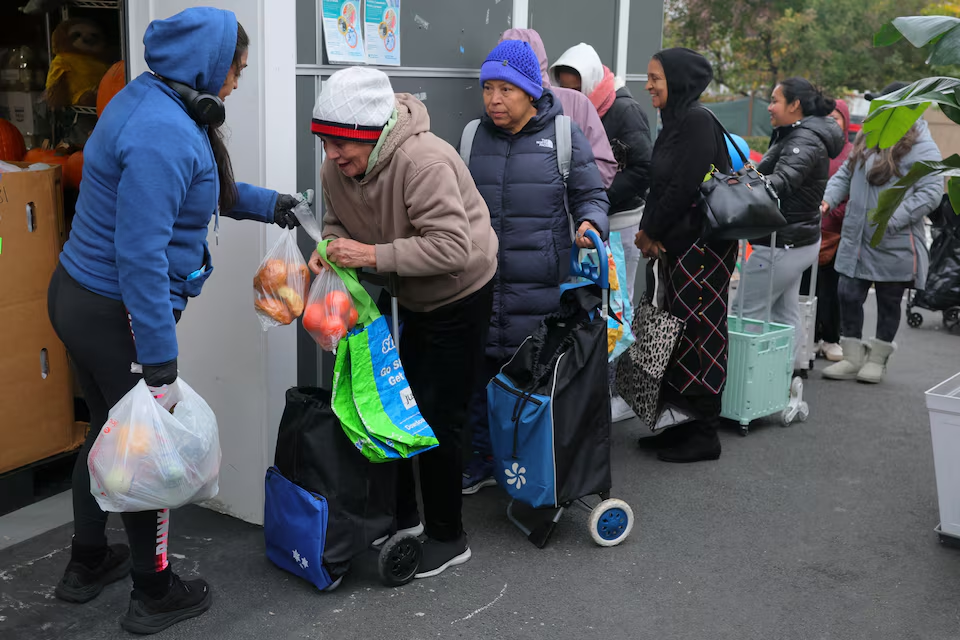
Other states are trying to help by sending extra money to local food banks and pantries. But organizations that fight hunger warn that the charitable food network is not big enough to replace the massive amount of food aid that SNAP provides.
A Crisis for Families
The delay in federal payments means millions of families are suddenly facing empty cupboards. The uncertainty is also hurting local grocery stores and the food supply chain, as the SNAP money helps boost local economies.
Even though two federal judges have recently ordered the U.S. government to use emergency funds to pay for at least some of the benefits, the money is still facing delays. This means local efforts to help families buy food will be needed more than ever until the funding fight in Washington, D.C., is settled.