
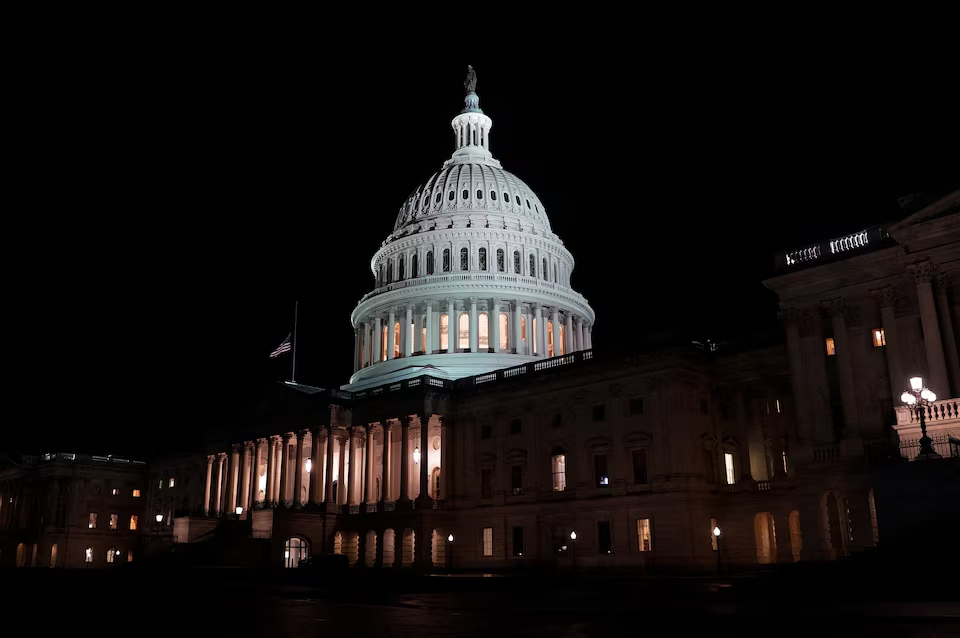
WASHINGTON, D.C. — November 10, 2025 — The United States Senate approved a crucial bipartisan spending package late Monday, taking a major step toward ending the longest government shutdown in U.S. history, which has persisted for over 40 days. The $60-40$ vote, which saw a coalition of Republicans and eight Democrats break a weeks-long deadlock, sends the measure to the Republican-controlled House of Representatives for final approval.
Thank you for reading this post, don't forget to subscribe!
Key Details of the Deal
The approved legislation, a “minibus” package, aims to restore full federal operations and provide immediate relief to hundreds of thousands of affected workers.
- Temporary Funding: The bill includes a continuing resolution (CR) to fund most federal agencies through January 30, 2026, allowing lawmakers more time to negotiate full-year appropriations.
- Full-Year Funding: Three specific appropriations bills are fully funded through the fiscal year 2026 (September 30, 2026):
- Military Construction and Veterans Affairs (MilCon-VA)
- Agriculture and the Food and Drug Administration (Agriculture-FDA)
- The Legislative Branch
- Worker Relief: The measure guarantees full retroactive back pay for all federal employees—both those furloughed and those working without pay—since the shutdown began on October 1.
- Layoff Reversal: It reverses thousands of federal employee layoffs (Reductions in Force, or RIFs) initiated by the Trump administration during the shutdown and prohibits any further reductions until the temporary funding expires on January 30, 2026.
- Food Aid: Funding for the Supplemental Nutrition Assistance Program (SNAP) is fully restored and extended through September 2026, safeguarding food aid for millions of Americans.
The Health Care Sticking Point
The primary point of contention throughout the shutdown—the extension of expiring tax credits under the Affordable Care Act (ACA)—was not directly addressed in the final funding bill. The enhanced premium tax credits, set to expire at the end of the year, are crucial for millions of lower-income Americans to afford health insurance.
In exchange for their votes, Senate Republicans granted a commitment to hold a floor vote on extending the ACA subsidies in December. This concession, however, has drawn fierce criticism from many Democrats who view the deal as a “surrender” since it does not guarantee the subsidies’ extension, only a future vote in the Republican-controlled chambers.
“This was the only deal on the table. It was our best chance to reopen the government and immediately begin negotiations to extend the [Obamacare] tax credits that tens of millions of Americans rely on to keep co1sts down,” stated Senator Jeanne Shaheen (D-NH), one of the moderate Democrats who backed the compromise.
Next Steps: House Vote and Presidential Signature
The legislation now heads to the House of Representatives. House Speaker Mike Johnson has urged lawmakers to return to Washington quickly, anticipating a vote as early as Wednesday.
President Donald Trump has expressed support for the bipartisan compromise, calling it “very good” and saying he would sign it into law once it reaches his desk. If the House passes the bill and the President signs it, the federal government could fully reopen within days, alleviating major disruptions to air travel, national parks, and vital federal services.