

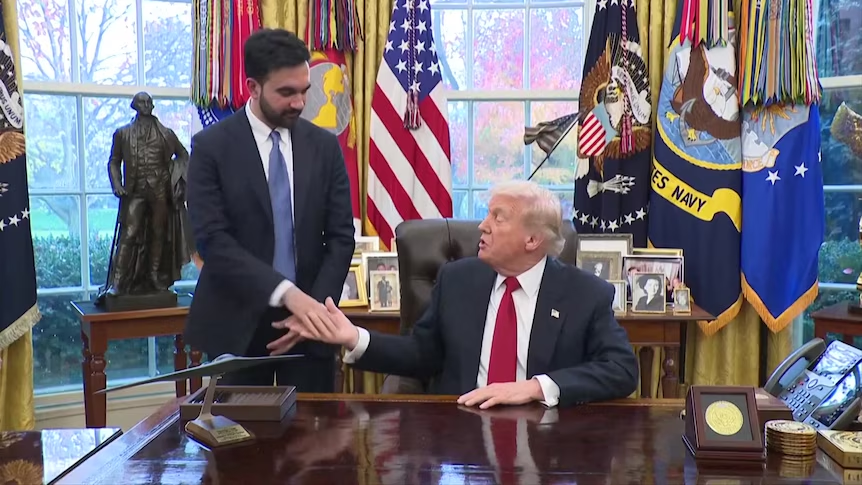
WASHINGTON, D.C. – The ideological gulf separating President Donald Trump and New York City Mayor-Elect Zohran Mamdani appeared to narrow significantly on Friday, November 21, 2025, as the two political opposites met in the Oval Office. The highly anticipated summit, which followed months of bitter personal attacks, yielded a surprise commitment to cooperation, focusing primarily on New York’s escalating affordability crisis and the need for sustained federal support.
The meeting marked a dramatic reversal from the recent mayoral campaign, during which President Trump labeled the democratic socialist Mayor-Elect a “communist lunatic,” and Mamdani repeatedly referred to the President as a “fascist.”
The Unexpected Political Truce
Emerging from the meeting, both leaders demonstrated a striking shift from confrontation to conciliation, emphasizing the pragmatic demands of governance.
-
President Trump’s Revised View: President Trump, who had previously threatened to cut federal aid to the city under Mamdani’s leadership, praised the Mayor-Elect. “I met a rational person who genuinely wants to do well for New York,” Trump told the gathered press. “I expect to be helping him, not hurting him, because I want New York City to be great.”
-
Mamdani on Shared Purpose: Mayor-Elect Mamdani focused on the practical necessity of the dialogue. “We are both very clear about our positions and our views,” Mamdani stated, “but the meeting focused on the shared purpose we have in serving the 8.5 million New Yorkers who are currently struggling under a cost-of-living crisis.”
Affordability Agenda Takes Center Stage
The core of the discussion revolved around Mamdani’s mandate—an aggressive agenda centered on lowering costs for residents.
-
Focus on Economic Pain Points: Mamdani successfully leveraged the shared voter frustration over inflation and the cost of living, issues which also played a role in the 2024 national election. The Mayor-Elect urged the redirection of federal funds away from international conflicts toward domestic social challenges, citing the city’s dire need for assistance with rent, grocery prices, and utility costs.
-
Housing and Transit Funding: Federal funding for critical city services remains paramount. While New York receives billions in federal revenue annually for agencies like the New York City Housing Authority (NYCHA) and the Department of Housing Preservation and Development (HPD), the incoming administration requires guarantees that these funds will be sustained, particularly for Section 8 housing vouchers and essential transit infrastructure.
-
Public Safety Dialogue: The leaders found common ground on the necessity of reducing crime rates. While their approaches differ—Mamdani prioritizing mental health investment and crisis response reform, and Trump favoring strict enforcement—a working collaboration on anti-gun trafficking initiatives and federal aid for public safety programs was deemed likely.
Defining Moments of Detente
The press briefing offered several remarkable, non-hostile exchanges that immediately captured national attention:
-
When Mamdani was pressed by a reporter on whether he still considered the President a “fascist,” President Trump intervened playfully: “That’s okay. You can just say yes, okay? It’s easier. It’s easier than explaining it. I don’t mind.” Mamdani briefly conceded, and Trump added he had “been called much worse than a despot.”
-
The President was also quick to dismiss politically motivated accusations of Mamdani being a “jihadist,” affirming that he had met a “rational person.”
The meeting, unusual in its cordiality, suggests that the realities of city governance—where the Mayor-Elect must secure federal resources to fulfill key promises like fare-free buses and a rent freeze—have compelled a strategic de-escalation of political tensions on both sides. This pragmatic alliance now sets the stage for a highly watched governance period in New York City.