

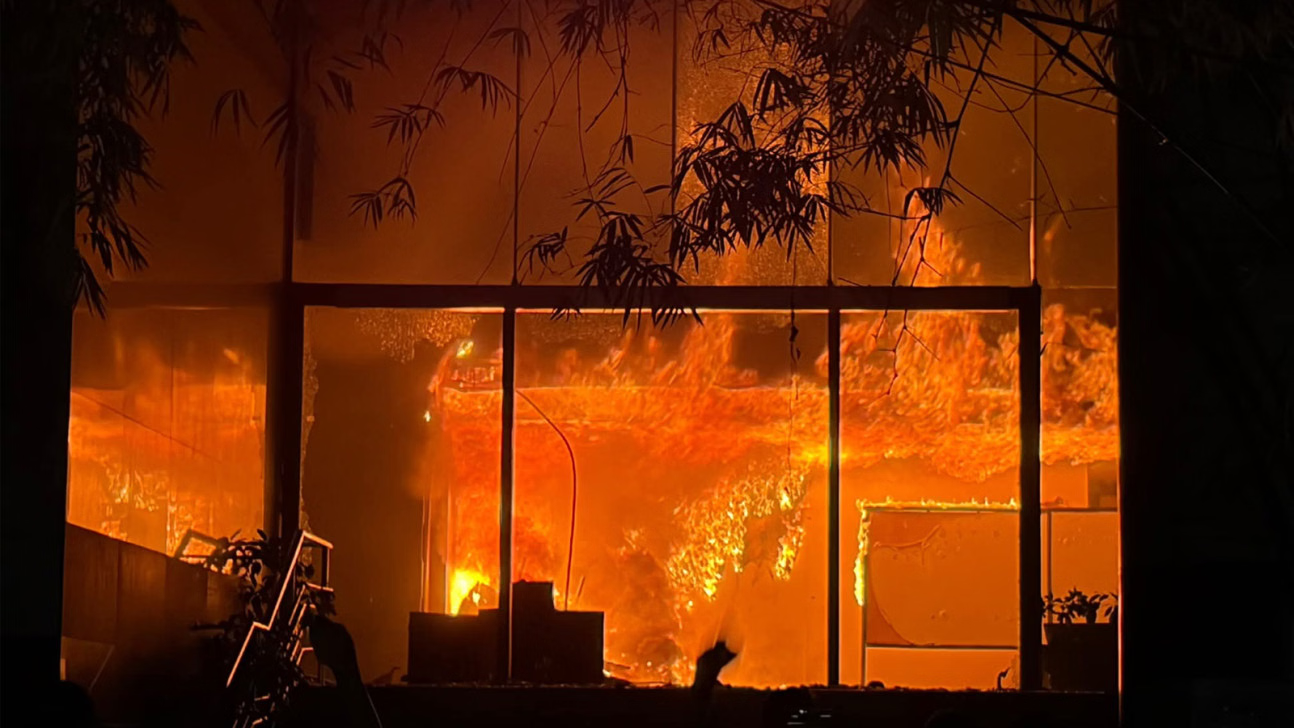
DHAKA — Friday, December 19, 2025, will go down as a “dark day” in the history of independent journalism in Bangladesh. In a coordinated wave of violence that has sent shockwaves through the region, the offices of the country’s two leading newspapers—Prothom Alo and The Daily Star—were vandalized and set ablaze by angry mobs, forcing the suspension of their print editions and leaving staff fighting for their lives amidst rising smoke.
The violence, triggered by the death of a prominent student leader, has plunged the nation into a fresh crisis, compounded by the horrific lynching of a Hindu man in Mymensingh over blasphemy allegations, raising urgent questions about law and order under the interim government.
Media Under Siege
The chaos erupted late Thursday night and continued into the early hours of Friday following news that Sharif Osman Hadi, a leader of the student group Inqilab Mancha, had succumbed to gunshot injuries in a Singapore hospital. Hadi had been shot in Dhaka earlier in the week.
Blaming the media outlets for perceived “anti-national” and “pro-India” bias, hundreds of protesters stormed the Karwan Bazar district in Dhaka. Eyewitnesses reported harrowing scenes as mobs breached the security of Prothom Alo, vandalizing equipment before setting the premises on fire.
The violence quickly spread to the nearby office of The Daily Star, the country’s largest English-language daily. Trapped on the upper floors as the lower levels burned, journalists took to social media with desperate pleas for help.
“I can’t breathe anymore. There’s too much smoke. I am inside. You are killing me,” wrote Zyma Islam, a reporter for The Daily Star, in a chilling Facebook post that went viral instantly.
Firefighters, initially blocked by the aggressive crowds, eventually managed to rescue over 25 staff members from the rooftop. Miraculously, no fatalities were reported among the journalists, but the psychological toll and physical damage are immense. For the first time in their history, both dailies failed to hit the stands on Friday morning.
“An Attack on the State”
The Editors’ Council of Bangladesh has condemned the arson as an assault on democracy itself. “This is not just an attack on brick and mortar; it is an attempt to silence the voice of the people and the conscience of the nation,” the Council said in a statement.
Chief Adviser Muhammad Yunus, facing his sternest test since taking office, strongly condemned the violence. “The attack on the country’s two leading media outlets is tantamount to an attack on free media itself,” Yunus said, promising that those responsible would be brought to justice. “The government stands beside you.”
However, critics argue that the interim government’s slow response to weeks of mounting anti-media rhetoric allowed the situation to spiral out of control.
Mob Justice and Communal Tension
Parallel to the attacks on the press, a darker narrative of communal violence has emerged. In Mymensingh’s Bhaluka Upazila, a Hindu garment worker identified as Dipu Chandra Das was brutally lynched by a mob on Thursday night.
Police reports indicate Das was accused of making derogatory comments about the Prophet Muhammad on social media. A mob seized him from his home, beat him to death, and then hung his body from a tree before setting it on fire. The grisly incident has drawn sharp rebuke from human rights organizations and has heightened fears among minority communities across Bangladesh.
Diplomatic Fallout
The unrest carries heavy geopolitical implications. Protesters in Chattogram targeted the residence of the Assistant Indian High Commissioner, hurling stones and chanting anti-India slogans, accusing New Delhi of harboring those responsible for Hadi’s shooting.
The Indian government has expressed deep concern over the safety of its diplomatic missions and the minority Hindu population. The attacks on Prothom Alo and The Daily Star—often viewed by hardliners as secular and liberal voices—are being interpreted by analysts as a message to silencing dissent and severing cultural ties with neighbors.
A Nation on Edge
As Friday progressed, an uneasy calm returned to Dhaka, enforced by heavy military and police deployment around key installations. However, with student groups vowing further protests and the journalists’ fraternity demanding immediate arrests, Bangladesh stands at a precarious crossroads.
Today, the printing presses may be silent, but the charred remains of the newsrooms speak volumes about the fragility of freedom in a nation still struggling to find its footing after the political upheavals of 2024.