

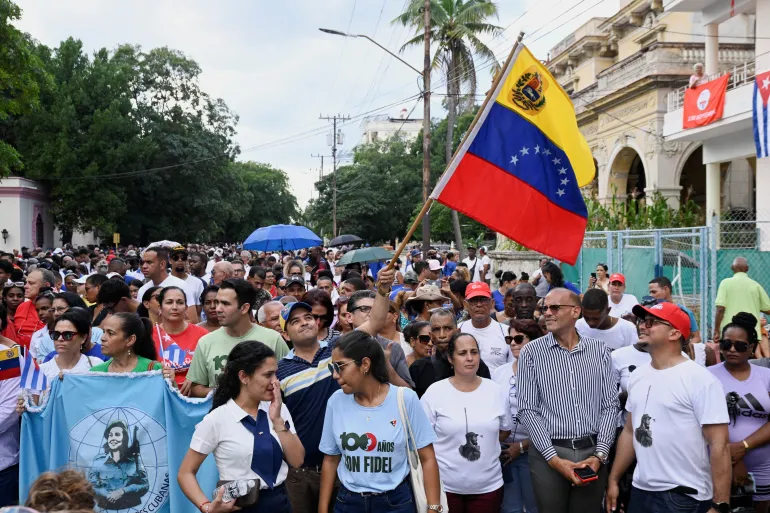
WASHINGTON D.C. — On Sunday, January 11, 2026, President Donald Trump issued a definitive ultimatum to the Cuban government: “Make a deal, before it is too late.” This declaration follows the successful execution of Operation Absolute Resolve, a high-stakes U.S. military raid on January 3 that resulted in the capture of Venezuelan President Nicolás Maduro. With Maduro currently awaiting trial in New York on narco-trafficking charges, the U.S. has moved to dismantle the “security-for-oil” lifeline that has sustained the Cuban economy for over two decades.
The “Zero Oil” Policy
The immediate threat to Havana is economic strangulation. For years, Venezuela has functioned as Cuba’s “gas station,” providing heavily subsidized crude oil in exchange for Cuban intelligence agents, military advisors, and medical personnel.
In a series of statements, the White House confirmed that U.S. forces have seized multiple tankers in the Caribbean and that the flow of Venezuelan oil to Cuba has been cut to zero.
-
The Intelligence Gap: Secretary of State Marco Rubio revealed that 32 Cuban military and intelligence officers were killed during the raid in Caracas. He described Havana as the “nerve center” that kept Maduro in power, labeling the Cuban government a “huge problem” that is now “in a lot of trouble.”
-
Economic Fragility: President Trump noted that without Venezuelan subsidies, the Cuban regime is “ready to fall,” predicting a total collapse of the island’s energy grid within weeks.
The Full Story: A Century of Conflict
The current tension is the latest chapter in a 125-year-old saga of proximity and ideological warfare.
The Era of Dominance (1898–1959)
The U.S.-Cuba relationship began with the Spanish-American War. Through the Platt Amendment, Washington maintained a legal right to intervene in Cuban affairs, treating the island as a strategic and economic protectorate. For decades, American corporations controlled Cuba’s sugar industry and tourism, often supporting authoritarian leaders like Fulgencio Batista to maintain stability.
The Cold War Divide (1959–1991)
Everything changed with the 1959 Revolution led by Fidel Castro. After Castro nationalized $1.7 billion in U.S. oil and land assets, the U.S. imposed a total trade embargo.

-
1961 Bay of Pigs: A CIA-backed invasion attempt ended in disaster, hardening Castro’s alliance with the Soviet Union.
-
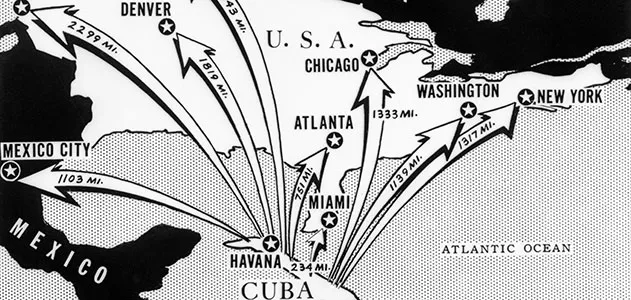
1962 Missile Crisis: The discovery of Soviet nuclear missiles in Cuba brought the world to the brink of nuclear war, resulting in a U.S. promise not to invade in exchange for the missiles’ removal.
-

The Venezuelan Lifeline (1999–2025)
After the Soviet Union collapsed in 1991, Cuba entered a “Special Period” of extreme poverty. It was saved in the early 2000s by Hugo Chávez and later Nicolás Maduro, who used Venezuela’s massive oil wealth to bankroll the Cuban revolution. This created the “Caracas-Havana Axis,” which the U.S. has long viewed as a hub for anti-American activity and Russian/Chinese influence in the Americas.
The Strategic “Why”: The Trump Doctrine in 2026
The warning to Cuba is not just about human rights; it is about a radical reassertion of the Monroe Doctrine. The administration’s goals are clear:
-
Removing Extraterritorial Rivals: Washington aims to expel Russian intelligence and Chinese monitoring stations from the island.
-
Resource Control: By controlling Venezuelan oil, the U.S. can dictate energy prices across the region and ensure that “adversaries of the United States” do not benefit from Western Hemisphere resources.
-
Regional Stability via Regime Change: The administration believes that removing the “brain” (Cuba) will prevent future socialist insurgencies in South America.
Current Status: Brink of Collapse
Reports from Havana indicate widespread blackouts and fuel rationing. While Cuban officials have vowed to “defend the nation against imperialist aggression,” the loss of their primary benefactor has left the Communist Party with no clear path to economic survival.
“I don’t think we need any action,” Trump told reporters. “It looks like it’s going down.”
PingTV Editorial Note
As the U.S. Navy maintains a “quarantine” of Venezuelan waters, the world watches to see if Havana will seek a “deal” to avoid total economic ruin or if this will lead to the most significant political shift in the Caribbean since the 1960s.
This video provides direct coverage of the official warnings issued by the U.S. administration following the events in Venezuela, offering visual context to the rhetoric mentioned in the article.
THE BIBI-GATE BREACH: How Iranian Hackers Mapped the World’s Elite
Trump Confirms Capture: Maduro and Wife Flown Out of Venezuela After Massive U.S. Strike