

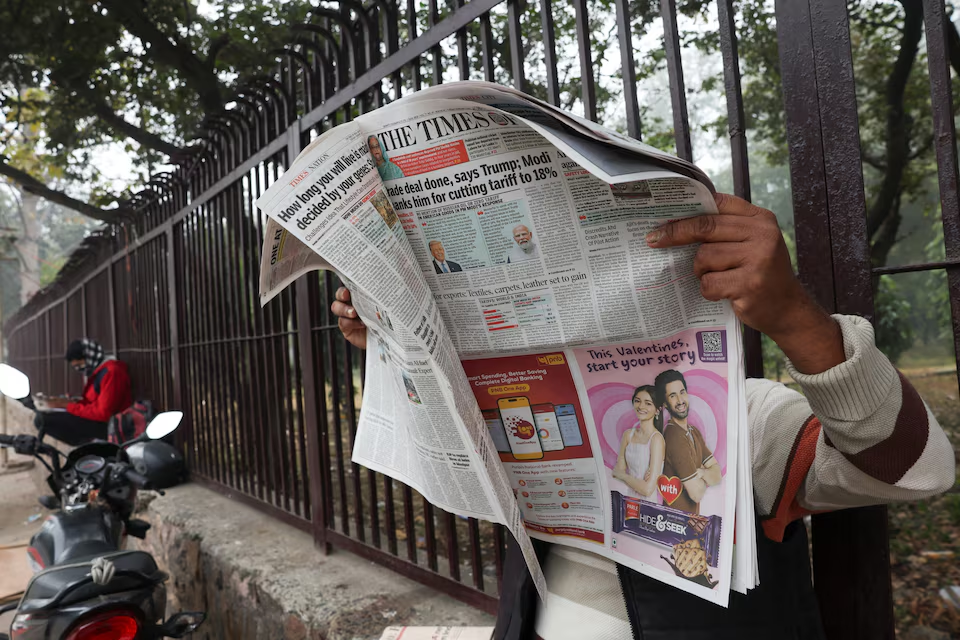
New Delhi | February 3, 2026
The global economic landscape shifted significantly last night as Prime Minister Narendra Modi and US President Donald Trump announced a historic trade agreement on February 2, 2026. While the stock markets in Mumbai and New York are celebrating, a closer look at the “fine print” reveals a complex geopolitical trade-off that will affect everything from textile exports in Surat to the price of petrol at your local pump.
The Breakthrough: From 50% to 18%
For the past year, Indian exporters have been reeling under a 50% “double-tariff” imposed by the Trump administration. This was a combination of a 25% reciprocal duty and a 25% “punitive penalty” specifically targeting India’s purchase of Russian oil.
Under the new deal:
-
The Good News: The US has agreed to slash these effective tariffs down to 18% immediately.
-
The Competition: This 18% rate is a strategic victory for India, as it is now lower than the tariffs faced by competitors like Vietnam (20%) and China (25%+), giving “Made in India” products a massive edge in the US market.
The Pressure Point: The “Russian Oil” Exit
The biggest question being asked is: What did India give up? According to President Trump’s statements, the deal was contingent on one major geopolitical shift: India must stop buying Russian oil. Since 2022, Russia has been India’s top supplier, providing nearly 35% of our crude at heavy discounts ($10–$15 below global prices). This cheap oil has been the “secret sauce” that kept Indian petrol and diesel prices stable despite global wars.
The Swap:
-
India has pledged to pivot its energy sourcing to the United States and potentially Venezuela.
-
President Trump claimed India will buy over $500 billion in American energy (oil, coal), technology, and agricultural products.
The “0% Deal” Controversy
Trump claimed that India has agreed to reduce its tariffs on US goods to “ZERO.” However, Indian Commerce Minister Piyush Goyal has been more measured. While India will lower barriers to American tech and electronics, the government has signaled that sensitive sectors like Agriculture and Dairy remain protected to safeguard the livelihoods of millions of Indian farmers.
Fact Check: Will Fuel Prices Go Up?
The most immediate concern for the Indian public is the impact on fuel costs.
| Factor | Russian Oil (Old) | US Oil (New) | Impact |
| Price per Barrel | $50 – $55 (Discounted) | $62 – $65 (Market Rate) | +$10 average |
| Shipping Cost | Lower (Shorter route) | Higher (Longer route) | Increase |
| Annual Bill | Current Baseline | +$9 to $12 Billion | Fiscal Pressure |
The “Buffer” Strategy: Analysts suggest the Indian government may use the increased tax revenue from the booming export sector (now that US tariffs are lower) to subsidize fuel prices or cut domestic excise duties. If they don’t, petrol prices could potentially rise by ₹3 to ₹7 per liter as the Russian discount disappears.
The Verdict: A Masterstroke or a Compromise?
-
The “Masterstroke” View: India has traded a temporary oil discount for permanent market dominance in the US. By lowering tariffs to 18%, India has effectively “beaten” China and SE Asian nations in the race for the American consumer.
-
The “Pressure” View: Trump successfully used “Tariff Diplomacy” to force India to align with the West against Russia, potentially increasing the cost of living for the average Indian through higher energy bills.
PingTV will continue to track the official joint statement from the Ministry of External Affairs for the exact timelines of the oil transition.
Other stories
TRUMP SCRAPS TARIFFS ON BEEF, COFFEE, AND TROPICAL FRUIT IN PUSH TO LOWER GROCERY PRICES