

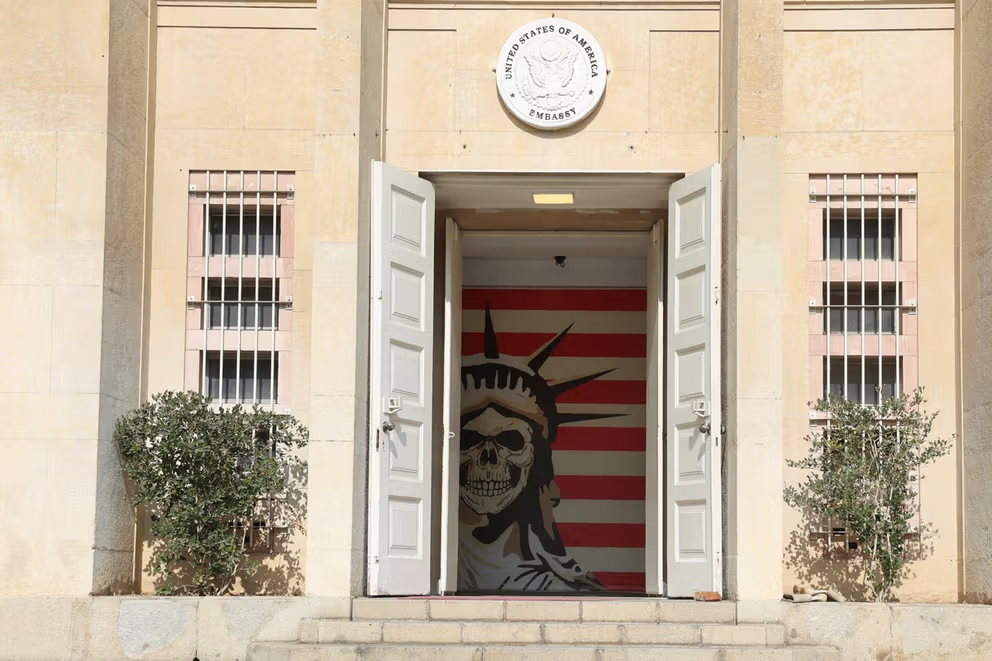
MUSCAT, OMAN — February 5, 2026 — In a high-stakes diplomatic gamble to avert a full-scale regional war, representatives from the United States and Iran are set to begin emergency negotiations in Muscat on Friday, February 6, 2026. The talks come amid deep skepticism from the Trump administration and a chilling warning from Russia that the Middle East is on the brink of an “explosive” escalation.
The Agenda: Nuclear vs. Regional Stability
The primary sticking point heading into Friday’s session remains the scope of the discussions. Tehran successfully lobbied to move the talks from Istanbul to Oman, seeking a venue that historically favors a narrow focus: the Iranian nuclear program and the removal of sanctions.
However, U.S. Secretary of State Marco Rubio and chief negotiator Steve Witkoff have made it clear that Washington’s agenda is far more expansive. The U.S. is demanding concessions on three critical fronts:
-
The Missile Program: Curtailing Iran’s ballistic missile capabilities, which Tehran has repeatedly stated are “off the table.”
-
Regional Proxies: Dismantling financial and military support for the “Axis of Resistance” networks across Lebanon, Yemen, and Iraq.
-
Domestic Issues: Addressing the treatment of Iranian citizens following the deadly crackdown on protesters that has left thousands dead since late 2025.
Russia’s ‘Explosive’ Warning
As the delegations gathered, Moscow issued a stern directive to both parties. Kremlin spokesperson Dmitry Peskov warned on February 5 that any failure in diplomacy could lead to “unpredictable negative consequences” and “chaos throughout West Asia.”
The timing is particularly fraught as the New START treaty—the last major nuclear arms control agreement between the US and Russia—is set to expire on February 5, 2026, officially ending 50 years of formal nuclear restraint between the world’s two superpowers.
“The potential for negotiations is far from exhausted,” Peskov stated. “Any forceful actions can only create chaos and destabilize the global security system.”
Trump’s ‘Deal or Strike’ Ultimatum
President Donald Trump has maintained a dual-track approach of “negotiation through intimidation.” Speaking at the National Prayer Breakfast on Thursday, February 5, Trump confirmed that while “they are negotiating,” he has sent a massive naval fleet to the region as a deterrent.
When asked about Iran’s Supreme Leader Ayatollah Ali Khamenei, Trump remarked: “I would say he should be very worried. We have a big fleet going over there. If we can work something out, that’d be great. If we can’t… probably bad things would happen.”
Context: A Region on the Edge
The urgency of the February 6 talks is driven by the aftermath of the 12-day war in June 2025, where Israeli and U.S. strikes severely damaged Iran’s enrichment sites at Fordow and Natanz. With Iran’s stockpile of 60% enriched uranium still a major concern, regional allies like Qatar and Turkey have pushed for this diplomatic window to remain open to avoid a “regional war” that Khamenei recently warned is inevitable if the U.S. strikes again.
Trump-Mamdani Summit: Pragmatism Trumps Ideology in White House Face-Off
US Sanctions 9 Indian Firms and 8 Nationals Over Alleged Role in Iran’s Oil and Petrochemical Trade