

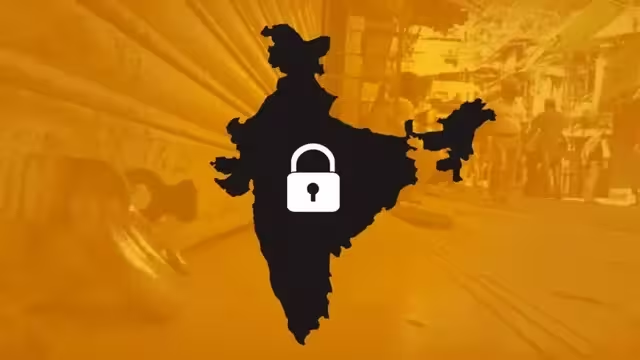
New Delhi, February 12, 2026 — Life across several Indian states came to a grinding halt today as over 30 crore workers joined a 24-hour nationwide general strike. The Bharat Bandh, called by a coalition of 10 central trade unions and the Samyukta Kisan Morcha (SKM), marks one of the largest industrial actions in recent history, protesting the central government’s latest economic and labor reforms.
Why is India Striking? Key Demands Explained
The protest is a coordinated response to several legislative changes implemented over the last year. The central unions—including INTUC, AITUC, CITU, and HMS—alongside major farmer bodies, have outlined five core grievances:
-
Repeal of Labour Codes (2025): Protesters demand the withdrawal of the four consolidated labor codes, alleging they erode job security and collective bargaining rights.
-
India-US Interim Trade Deal: Farmers fear the new trade framework will “dump” subsidized American agricultural products, specifically soy oil and corn-related items, into Indian markets.
-
The VB-G RAM G Act 2025: While the government touts this as an upgrade to MGNREGA (increasing work to 125 days), unions criticize the new 60:40 cost-sharing model with states and the “agricultural pause” clause.
-
Privatization Halt: A demand to stop the sale of public sector assets in banking, insurance, and energy.
-
8th Pay Commission: Central employees are seeking immediate updates to wage structures and the restoration of the Old Pension Scheme (OPS).
Ground Report: What’s Open and What’s Closed?
| Sector | Impact Level | Status Details |
| Banking | Moderate to High | Public sector banks (SBI, BoB, UCO) face delays. Online banking, UPI, and ATMs remain fully functional. |
| Transport | High | Heavy disruption in Kerala, Odisha, and Assam. State buses and autos are off-road in several districts. |
| Railways & Air | Low | Core operations are running, but expect “chakka jams” on roads leading to stations and airports. |
| Education | Varies by State | Schools are closed in Odisha and West Bengal; largely open in Delhi, UP, and Rajasthan. |
| Essential Services | None | Hospitals, pharmacies, and milk supply are exempted from the strike. |
Regional Highlights
The impact of the Bandh has been polarized across the country. Odisha and Assam reported near-total shutdowns, while states like Kerala and West Bengal saw massive rallies. Conversely, impact remained minimal in Uttar Pradesh and Rajasthan, where government presence ensured normal operations. In Punjab, the ruling Aam Aadmi Party (AAP) has officially extended its support, with cadre joining protesters on the streets to condemn the India-US trade pact as a “betrayal of farmers.”
Expert Take: The Economic Ripple Effect
Analysts suggest that while the strike highlights deep-seated rural and industrial anxiety, the government’s shift toward the VB-G RAM G Act and the Electricity Bill 2025 is part of a broader “Viksit Bharat 2047” roadmap. The standoff today reflects the friction between rapid modernization and traditional worker protections.
What you should do:
Avoid travel to high-protest zones like district headquarters or major highway junctions.
Use digital payment methods as counter services at banks will be limited.
Check for local administration advisories regarding school closures in your specific city.
The strike is scheduled to conclude at midnight tonight. Stay tuned to PingTV for live updates from the ground.
Read More News
Jubilee Hills Bypoll: Race Too Close to Call as AIMIM Tilt Boosts Congress, BRS Fights for Survival