
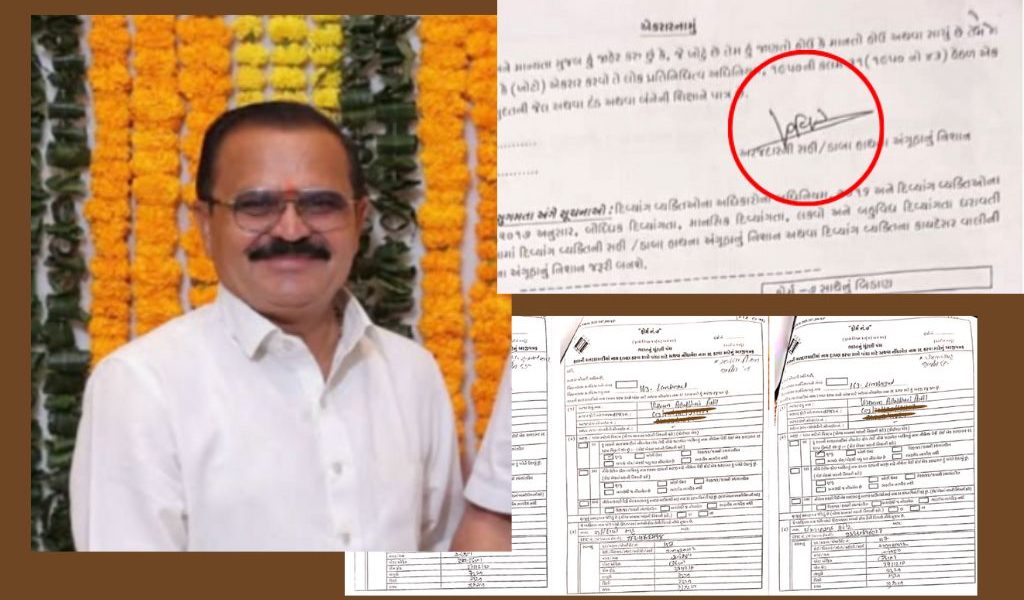
SURAT, February 4, 2026 — A significant political storm has broken out in Surat’s Salabatpura area following allegations that over 300 Muslim voters were wrongfully removed from the electoral rolls. Local residents and opposition leaders have pointed fingers at a BJP corporator, accusing him of orchestrating the deletions through the fraudulent submission of Form 7 applications.
The controversy centers on claims that Alpesh Vachhrajani, a local BJP representative, allegedly filed multiple objections falsely stating that living individuals had passed away. These claims were reportedly part of the ongoing Special Intensive Revision (SIR) of electoral rolls in Gujarat, a massive state-wide exercise aimed at “purifying” voter lists.
Targeted Disenfranchisement Alleged
According to reports and local complaints, affected residents only discovered their missing names after the draft electoral rolls were published on December 19, 2025. Many of those marked for deletion as “deceased” claim they were never visited for verification, nor were death certificates produced to justify the removal.
“I have lived in this ward for thirty years and have never missed an election. Suddenly, I am dead in the eyes of the Election Commission,” said one resident during a protest in Salabatpura.
Protesters have shared documentary evidence on social media, alleging that hundreds of Form 7 applications bore matching signatures and the same contact details, suggesting a coordinated bulk-filing effort rather than individual grievances.
State-Wide Deletions: The Numbers
The incident in Surat reflects a broader trend observed during Gujarat’s 2026 SIR process. The scale of the cleanup has been unprecedented:
| Category of Deletion | Number of Voters Removed (Gujarat) |
| Deceased | 18,07,278 |
| Permanently Migrated | 40,25,553 |
| Absent/Untraceable | 9,69,662 |
| Duplicate/Multiple Entries | 3,81,470 |
| Total Voters Deleted | 73,73,327 |
Overall, Gujarat’s total electorate shrunk from 5.08 crore to 4.34 crore in the draft rolls—a reduction of approximately 14.5%. While the Election Commission of India (ECI) maintains that these deletions are the result of rigorous house-to-house verification by Booth Level Officers (BLOs), the high concentration of deletions in specific segments—reportedly reaching 25.7% in parts of Surat—has fueled accusations of selective targeting.
Political Fallout
The Congress and Aam Aadmi Party (AAP) have launched formal protests, labeling the move a “systematic attempt at voter suppression” ahead of the upcoming municipal elections. Similar complaints of mass Form 7 misuse have surfaced in Anand district, which saw a record 40,607 deletion requests, and in Ahmedabad’s Gomtipur area.
BJP state representatives have dismissed the allegations, stating that the SIR is a transparent, ECI-led process and that the party has no role in the official verification of voters.
What’s Next for Affected Voters?
The Election Commission has emphasized that the draft roll is not final. Residents whose names have been wrongfully deleted can still take action:
-
Claims and Objections: Voters can file Form 6 for re-inclusion.
-
Verification Deadline: Electoral Registration Officers (EROs) are scheduled to dispose of all pending claims and objections by February 10, 2026.
-
Final Publication: The final electoral roll for Gujarat is expected to be published on February 14, 2026.
Local activists in Surat are currently assisting disenfranchised residents in filing affidavits to challenge the deletions before the final deadline.
Other News
Gujarat Cabinet Reshuffle: Harsh Sanghavi Appointed Deputy CM; Rivaba Jadeja Sworn In