

SYDNEY, NSW – Authorities in New South Wales have issued an extraordinary warning to swimmers and surfers to stay out of the ocean and “just go to a local pool” after a 39-year-old surfer became the fourth victim of a shark interaction in just two days.
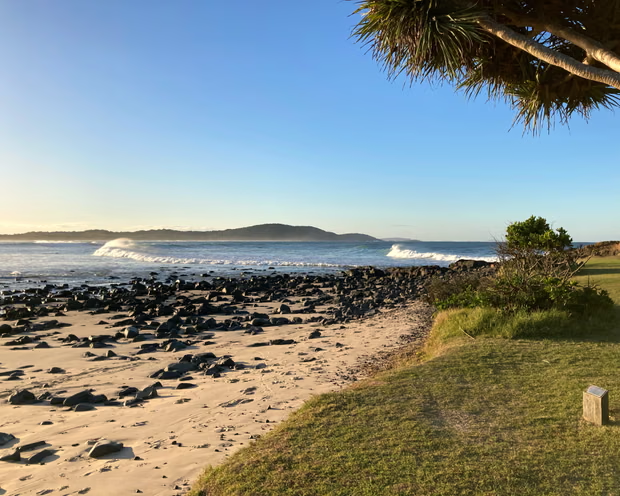
The latest incident occurred Tuesday morning, January 20, 2026, at Point Plomer, near Crescent Head on the NSW Mid-North Coast. The surfer was bitten through his board and sustained minor injuries to his leg and chest. While he was treated and discharged from Kempsey District Hospital, the rapid succession of attacks has sent shockwaves through coastal communities.
A “Perfect Storm” of Conditions
The surge in shark activity follows a period of torrential rain and flooding across the state. Experts say the deluge has created a “perfect storm” for bull shark encounters, as murky, brackish water and sewage runoff draw predators closer to the shore.
“We have such poor water quality that’s conducive to bull shark activity,” said Steven Pearce, CEO of Surf Life Saving NSW. “We have two people critically injured in hospital this morning. At this stage, we’re advising that the beaches are unsafe. Just go to a local pool.”
Timeline of the 48-Hour Spate
The Point Plomer incident follows three separate attacks in the Sydney region:
-
Sunday Afternoon: A 12-year-old boy was critically injured while swimming at a popular beach in Sydney Harbour (Vaucluse). He remains in a life-threatening condition.
-
Monday Morning: An 11-year-old boy escaped injury at Dee Why Beach after a shark bit a significant chunk out of his surfboard.
-
Monday Evening: A 27-year-old man suffered “life-changing” leg injuries at Manly’s North Steyne Beach. He was saved by quick-thinking bystanders who used a surfboard leg rope as a makeshift tourniquet.
State-Wide Response and Closures
In response to the cluster of attacks, dozens of beaches from Sydney’s Northern Beaches to the Mid-North Coast have been closed. NSW Police and Department of Primary Industries (DPI) have deployed drones and SMART drumlines to monitor the coastline.
Marine biologists note that while shark attacks remain statistically rare, the current environmental conditions—turbid water and high baitfish activity—make the “strike risk” significantly higher. Bull sharks, known for their ability to tolerate low-salinity water, are the primary species suspected in these incidents.
Authorities are urging the public to check the SharkSmart app before heading to the coast and to strictly avoid swimming in river mouths or canal systems where visibility is low.
What’s in a Name? The Story Behind Cyclone Montha and the Art of Naming Storms
Bondi Beach Massacre Leaves 10 Dead, Multiple Injured; Two Shooters in Custody
Brazil’s Deadliest Police Raid Failed to Capture or Kill Gang Leaders: ‘There is no law here’