

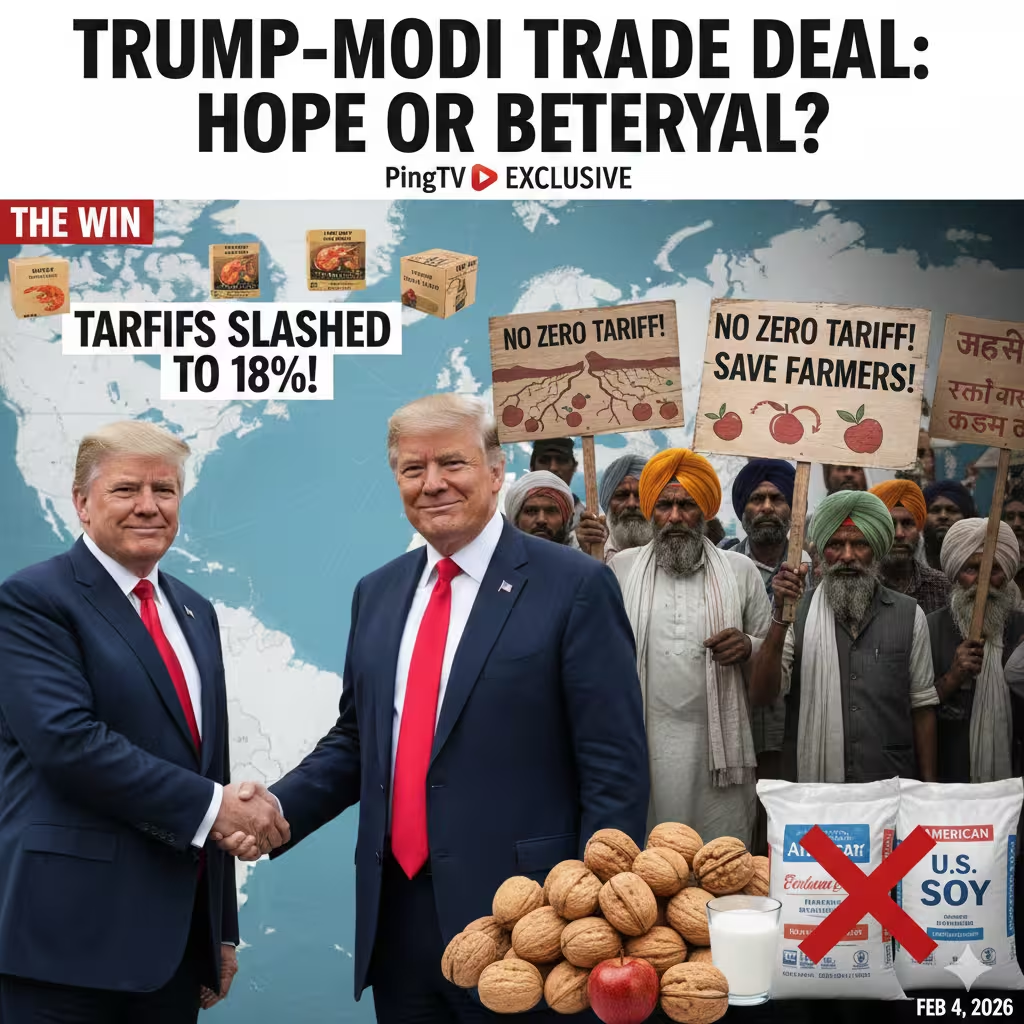
By PingTV News Desk | February 4, 2026
NEW DELHI – In a historic but high-stakes move, Prime Minister Narendra Modi and U.S. President Donald Trump have sealed a major trade deal that slashes American tariffs on Indian goods from 50% down to 18%. While the stock market is celebrating and exporters are “looking for firecrackers,” a storm is brewing in India’s rural heartland over what this means for the nation’s 14 crore farmers.
The “Zero Tariff” Shockwave
While PM Modi hailed the deal as a “pivotal moment” for the strategic partnership, President Trump’s claim that India has agreed to reduce its own tariffs on U.S. goods to ZERO has sent shockwaves through the agricultural sector.
Commerce Minister Piyush Goyal moved quickly to calm nerves, asserting that India’s “red lines” remain intact. “Sensitive sectors such as agriculture and dairy have been protected. PM Modi has never allowed the interests of our farmers to be compromised,” Goyal stated in a press briefing.
The Agriculture List: What’s In and What’s Out?
While the final joint statement is still being “papered,” early details from U.S. Trade Representative Jamieson Greer and Indian officials reveal a selective opening of the Indian market:
✅ The Concessions (Likely to see Zero Duty):
-
Fruits & Nuts: Apples, pears, almonds, and walnuts from the U.S. are expected to enter India at zero or near-zero duty.
-
Premium Goods: Wine, spirits, and high-end processed vegetables.
-
Agri-Tech: Heavy machinery and technology for farming.
❌ The Protected “Red Lines” (Government Claims):
-
Dairy: Despite massive U.S. pressure, India reportedly refused to open its milk and dairy markets due to concerns over meat-fed cattle and small-scale farmer livelihoods.
-
Staples: Rice, wheat, and sugar remain off the table for now.
-
The GM Battle: India is resisting Genetically Modified (GM) crops like U.S. soybeans and maize, though the U.S. is pushing for “science-based standards.”
Is it a Benefit? (The Export Boom)
For India’s coastal and industrial belts, the deal is an undeniable victory. The 18% tariff rate gives India a massive edge over regional rivals like Vietnam (20%) and China (34%).
-
Seafood Surge: Exporters of shrimp and fish, who saw a 15% drop in volumes last year, are expecting a massive rebound.
-
Textile Revival: Garment and carpet factories in hubs like Tiruppur and Panipat are preparing to operate at full capacity again.
Is it a Blow? (The Farmers’ Fear)
The Samyukt Kisan Morcha (SKM) has already called the deal a “betrayal,” announcing a week-long protest from February 4 to 11.
-
Price Crash Fears: Farmers in Himachal Pradesh and Kashmir fear that cheap, zero-duty American apples and walnuts will crash local prices.
-
The $500 Billion Trap: To meet Trump’s target of $100 billion in annual U.S. imports, critics argue India will eventually have to open its markets to subsidized U.S. corn, cotton, and soy, which could devastate local prices.
PingTV Analysis: The Road Ahead
The deal is a masterclass in “Huglomacy,” but the devil is in the details. While the 18% U.S. tariff is a gift to Indian industry, the commitment to “Buy American” puts the Indian government in a tight spot. Can India buy $500 billion of U.S. goods without hurting its own farmers?
The next two weeks will be crucial as the official joint statement is released. PingTV India will continue to track every commodity on that list.
EXCLUSIVE: EU-India Trade Deal Will Exclude Agriculture, von der Leyen Confirms
Trump Threatens New Tariffs on Indian Rice, Vows to ‘Take Care Of’ Alleged Dumping