

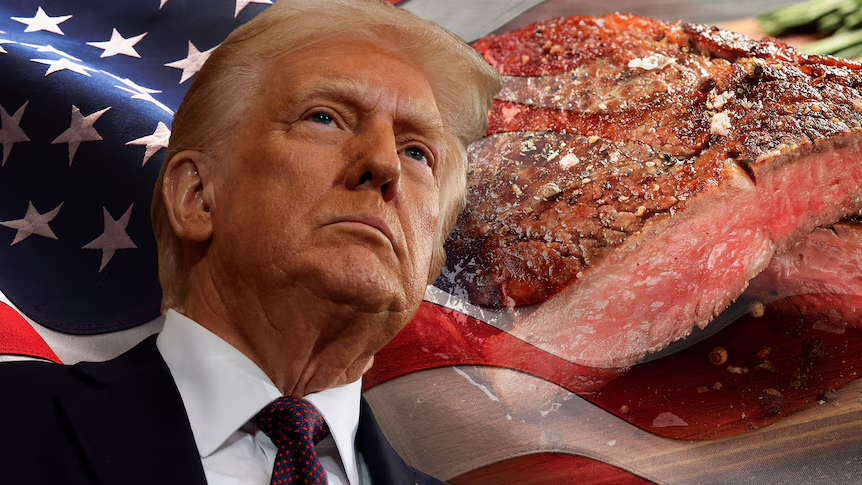
WASHINGTON, D.C. – In a major reversal of a signature policy, President Donald Trump on Friday announced the immediate rollback of U.S. tariffs on a broad swath of everyday food imports, including beef, coffee, and tropical fruits, as his administration seeks to address mounting consumer frustration over high grocery bills.
The dramatic move, formalized by executive order, comes amid elevated inflation and follows recent off-year election losses where voters overwhelmingly cited economic concerns, including the rising cost of groceries, as their top issue.
A Concession on Costs
The administration’s decision marks an abrupt shift from the President’s long-held assertion that his sweeping import levies, imposed globally in April, were being paid almost entirely by foreign countries.
Speaking to reporters aboard Air Force One after the announcement, President Trump conceded the tariffs may have contributed to higher costs. “We just did a little bit of a rollback on some foods like coffee,” he said. When pressed on the tariffs’ impact on consumer prices, he acknowledged, “I say they may, in some cases,” though he maintained that “to a large extent they’ve been borne by other countries.”
Democrats were quick to frame the policy change as a tacit admission of failure. “President Trump is finally admitting what we always knew: his tariffs are raising prices for the American people,” said Virginia Democratic Rep. Don Beyer. He added that the White House is now attempting a political “pivot to affordability” after taking an electoral beating.
What Will Get Cheaper?
The executive order removes tariffs on a wide range of staples key to the American diet. This list of exempted goods includes:
-
Beef: An item of particular concern, as beef prices have hit record highs, fueled in part by tariffs on major exporters like Brazil.
-
Coffee
-
Tropical Fruits: Including bananas and oranges.
-
Tea
-
Fruit Juice
-
Cocoa
-
Spices
-
Tomatoes
-
Certain Fertilizers
Many of these products are not produced domestically in the U.S., meaning the tariffs had little effect on spurring American production but did inflate costs for consumers. For instance, coffee prices have spiked by nearly 20% in the last year, largely due to import taxes on the essential commodity.
Industry and Trade Implications
Industry groups welcomed the tariff relief. The Food Industry Association, representing retailers and producers, praised the “swift tariff relief,” noting that U.S. import taxes are “an important factor” in the complex pricing environment. They called the reduction a “critical step ensuring continued adequate supply at prices consumers can afford.”
The White House also justified the rollback by citing newly reached framework trade agreements with key partners, including Ecuador, Guatemala, El Salvador, and Argentina. These deals are aimed at boosting U.S. industrial and agricultural exports while easing trade barriers on food imports from those nations.
While experts caution that the full benefit of these reductions may take weeks or months to materialize on grocery shelves, the move signals the administration is prioritizing immediate consumer price relief.